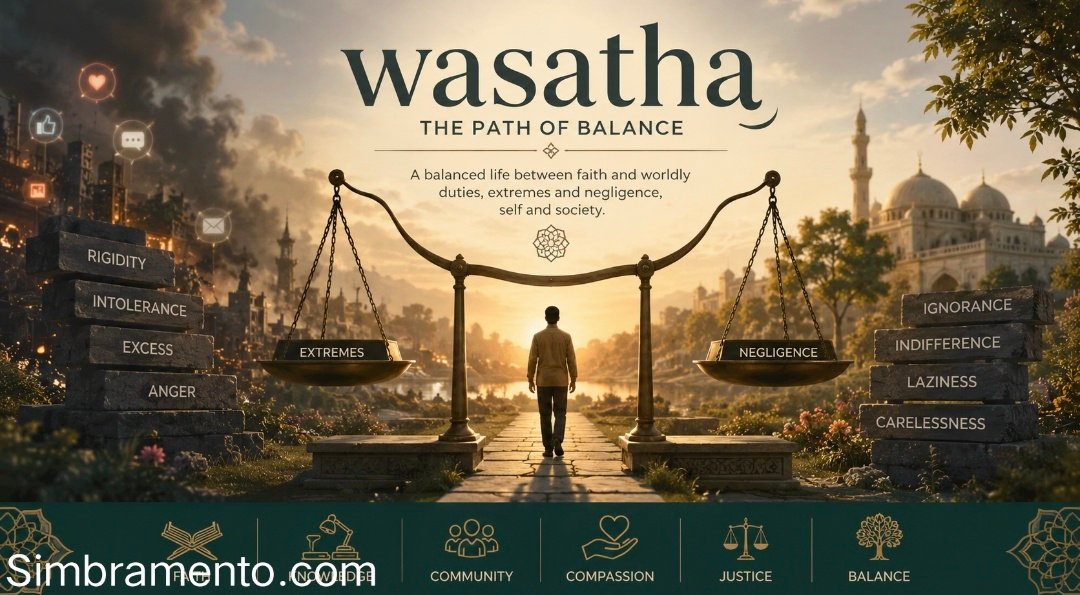
wasatha and the Art of Balance in Modern Islamic Life
Introduction
The idea of balance has shaped civilizations, philosophies, and spiritual traditions for centuries. In Islamic thought, one of the most meaningful concepts connected to balance is wasatha. Although many people encounter the term in religious discussions, its influence reaches far beyond theology. It touches ethics, education, family relationships, leadership, financial behavior, emotional discipline, and social harmony. At its core, wasatha represents a way of living that rejects destructive extremes and encourages thoughtful moderation.
In today’s world, people are constantly pushed toward excess. Social pressure encourages louder opinions, faster lifestyles, stronger reactions, and endless consumption. In such an environment, the principle of wasatha feels increasingly relevant. It offers a framework that values restraint without weakness, confidence without arrogance, and devotion without fanaticism. Rather than demanding isolation from society, it teaches individuals how to remain spiritually grounded while actively participating in everyday life.
The importance of wasatha has grown in modern discussions because many communities are searching for ways to preserve identity while maintaining social stability. Scholars, educators, and community leaders often describe wasatha as a foundation for healthy coexistence. It supports justice, compassion, intellectual openness, and ethical responsibility. These qualities explain why the concept continues to be studied in academic institutions, religious circles, and social reform movements across the Muslim world.
What Is wasatha
The term wasatha originates from the Arabic root connected with the idea of the middle position, balance, fairness, and moderation. In Islamic understanding, it refers to a balanced path that avoids harmful extremes in belief, behavior, and social conduct. The concept is closely associated with the Arabic expression “ummatan wasatan,” which appears in the Qur’an to describe a just and balanced community.
READ MORE: dulcfold com and the Quiet Shift in Online Discovery
However, wasatha does not simply mean standing halfway between two positions. Islamic scholars have long explained that it represents moral excellence and justice rather than compromise for its own sake. A balanced person is not someone without principles. Instead, it is someone capable of acting wisely without falling into excess or negligence. Classical interpretations often describe wasatha as fairness, goodness, and the best path among competing extremes.
The meaning of wasatha also includes emotional and spiritual equilibrium. A person practicing wasatha is encouraged to care for worldly responsibilities while maintaining spiritual awareness. Islam does not promote complete withdrawal from society, nor does it support obsession with material life. The balanced path encourages work, family care, worship, learning, and social responsibility together within a healthy framework.
The Historical Foundations of wasatha
The intellectual roots of wasatha stretch deeply into Islamic history. Early Muslim scholars discussed moderation as an essential quality of both individuals and societies. They examined how communities collapse when they move toward rigid extremism or complete moral carelessness. Because of this, moderation became linked to justice, wisdom, and social stability.
Islamic jurists and theologians used wasatha to explain how Islamic law should be understood with awareness of context, compassion, and public welfare. The concept helped scholars distinguish between authentic religious commitment and harmful excess. Over centuries, many scholars argued that true strength lies not in harshness but in disciplined balance.
Historically, Muslim civilizations often demonstrated wasatha through intellectual diversity. Scientific inquiry, philosophy, literature, trade, and spirituality flourished side by side in many Islamic societies. This balance between faith and intellectual curiosity allowed Muslim scholars to contribute significantly to mathematics, medicine, astronomy, architecture, and ethics. The spirit of wasatha encouraged engagement with knowledge while remaining connected to moral responsibility.
wasatha as a Response to Extremism
One reason wasatha receives so much attention today is its connection to discussions about extremism. Modern societies across the world have witnessed the consequences of radical thinking, ideological rigidity, and social polarization. Islamic scholars frequently describe wasatha as a direct response to these dangers because it rejects harshness, intolerance, and fanaticism.
The principle teaches that religious devotion should never destroy compassion or justice. A balanced believer is expected to uphold moral principles while treating others with dignity. This perspective challenges the misconception that strength requires aggression. In the framework of wasatha, wisdom and patience are signs of maturity rather than weakness.
Importantly, wasatha also warns against the opposite extreme: complete moral indifference. Moderation does not mean abandoning values or accepting every behavior without reflection. Instead, it calls for disciplined judgment guided by ethics, fairness, and understanding. This distinction is essential because many people wrongly interpret moderation as lack of conviction.
Communities that embrace wasatha often focus strongly on education, dialogue, and social responsibility. They aim to create environments where disagreements can exist without hatred and where faith strengthens social harmony rather than division.
The Role of wasatha in Daily Life
Although wasatha is frequently discussed in academic and religious settings, its real power appears in ordinary life. The concept influences how people speak, spend money, raise children, manage emotions, and interact with society. Its practical nature is one reason it continues to resonate across generations.
In personal behavior, wasatha encourages emotional balance. People are advised to avoid uncontrolled anger, excessive pride, and destructive jealousy. Emotional discipline is considered necessary for healthy relationships and clear decision-making. Someone practicing wasatha learns how to respond thoughtfully instead of reacting impulsively.
Financial conduct also reflects the philosophy of wasatha. Islamic teachings discourage both wasteful luxury and harmful stinginess. Wealth is viewed as a responsibility rather than a tool for arrogance. Balanced financial behavior includes generosity, ethical earning, and mindful consumption.
Family life offers another important example. Parents are encouraged to combine kindness with discipline, guidance with compassion, and authority with understanding. Relationships built on balance tend to create healthier emotional environments for children and stronger long-term family stability.
Even worship reflects wasatha. Islamic teachings repeatedly emphasize consistency over unsustainable intensity. Spiritual growth is understood as a lifelong process requiring patience and steadiness rather than extreme behavior that eventually leads to exhaustion.
wasatha in Education and Intellectual Growth
Education occupies a central place in discussions about wasatha because balanced thinking requires knowledge, reflection, and ethical awareness. Scholars often argue that ignorance creates fertile ground for extremism and manipulation. A well-educated society is more capable of distinguishing wisdom from emotional propaganda.
The philosophy of wasatha supports intellectual curiosity while maintaining moral discipline. Historically, many Muslim scholars explored philosophy, science, literature, and medicine without seeing these fields as threats to faith. Instead, knowledge was considered part of humanity’s responsibility to understand creation and improve society.
Modern educators increasingly use wasatha as a framework for developing critical thinking and ethical citizenship. Students are encouraged to engage with different perspectives respectfully while maintaining clear moral values. This balanced educational approach can help reduce social division and encourage constructive dialogue.
The concept also promotes balance between spiritual education and practical knowledge. A person may succeed professionally yet still require ethical guidance and emotional maturity. Wasatha therefore rejects the false choice between worldly success and spiritual integrity.
Social Harmony and Community Stability
One of the strongest aspects of wasatha is its social dimension. A balanced society cannot survive if people constantly move toward ideological extremes. Communities require trust, justice, empathy, and mutual respect to remain stable.
Wasatha encourages societies to protect diversity while maintaining shared ethical foundations. Historically, many Muslim communities included people from different ethnic, linguistic, and cultural backgrounds. The principle of moderation helped create systems where coexistence was possible despite differences.
Modern multicultural societies can still benefit from the philosophy of wasatha. The concept encourages respectful disagreement rather than hostility. It reminds people that every disagreement does not need to become a permanent conflict. This approach is particularly valuable in the age of social media, where outrage often spreads faster than thoughtful discussion.
Community leaders who embrace wasatha typically emphasize reconciliation, education, and public welfare. They focus on reducing social tensions through dialogue rather than encouraging division for political or ideological gain.
The Psychological Value of wasatha
The modern world has created enormous emotional pressure. Many individuals struggle with anxiety, burnout, identity confusion, and social isolation. In this environment, the balanced mindset encouraged by wasatha offers important psychological benefits.
A life built around extremes often becomes emotionally unstable. Constant competition, excessive ambition, or obsessive behavior can damage mental health and relationships. Wasatha encourages sustainable living rather than endless emotional intensity.
The concept teaches individuals to maintain perspective. Success should not produce arrogance, and hardship should not destroy hope. This emotional balance creates resilience. People who internalize wasatha often develop greater patience and self-control because they learn to avoid destructive reactions.
Spiritual balance also supports mental well-being. Religious practice in Islam is designed not to overwhelm human nature but to guide it gradually. Wasatha therefore connects spiritual discipline with emotional health rather than treating them as separate areas of life.
Challenges to Practicing wasatha Today
Despite its importance, practicing wasatha has become increasingly difficult in modern society. Contemporary culture often rewards extremes because dramatic behavior attracts attention. Social media algorithms, political polarization, and consumer culture all encourage emotional intensity rather than thoughtful moderation.
Young people especially face pressure to define themselves through rigid identities or aggressive opinions. Balanced voices are sometimes dismissed as weak or indecisive. Yet history repeatedly shows that societies damaged by extremism eventually search again for stability and moderation.
Another challenge comes from misunderstanding the concept itself. Some people interpret wasatha as passive compromise or avoidance of difficult moral questions. In reality, the principle requires courage, discipline, and wisdom. Maintaining balance is often harder than embracing extremes because it demands patience and careful judgment.
Religious scholars also emphasize that wasatha must remain connected to justice. Moderation cannot become an excuse for ignoring oppression, inequality, or ethical responsibility. True balance requires both compassion and accountability.
Conclusion
The enduring relevance of wasatha lies in its ability to connect spirituality, ethics, intellect, and daily life into a balanced human experience. It is not merely a theological term or a philosophical slogan. It represents a practical approach to living with wisdom, fairness, and emotional stability.
In a world increasingly shaped by division and excess, wasatha offers a path rooted in balance without weakness and conviction without hostility. Its teachings encourage individuals to pursue knowledge, maintain moral discipline, respect others, and build healthier communities. The concept reminds people that strength is not found in extremism but in the ability to remain grounded, just, and compassionate under pressure.
The lasting power of wasatha comes from its universal relevance. Whether applied to personal behavior, family life, education, leadership, or social harmony, the principle continues to provide meaningful guidance for modern society. As communities search for stability in uncertain times, the balanced vision of wasatha remains one of the most thoughtful and enduring ideas within Islamic thought.
FAQs
What does wasatha mean in Islam?
Wasatha refers to balance, moderation, fairness, and the middle path in Islamic thought. It encourages avoiding harmful extremes while maintaining ethical and spiritual integrity.
Is wasatha the same as compromise?
No. Wasatha does not mean abandoning principles or accepting every viewpoint equally. It means practicing wisdom, justice, and balanced judgment without falling into extremism.
Why is wasatha important today?
Wasatha is important because modern societies face growing polarization, emotional stress, and ideological extremism. The concept promotes social harmony, thoughtful dialogue, and emotional stability.
How does wasatha influence daily life?
Wasatha affects behavior, financial decisions, family relationships, emotional control, education, and worship. It encourages balance in all areas of life rather than excess or neglect.
Can wasatha help communities become more peaceful?
Yes. Many scholars believe wasatha supports coexistence, justice, and respectful disagreement. Communities guided by balanced principles are often more stable and socially connected.