Technology
SOA OS23 Explained: A Modern Blueprint for Modular Systems


Introduction
SOA OS23 is a term that’s been surfacing more often in technical, architectural, and systems-planning conversations, yet it’s rarely explained in a clear, human way. At its core, SOA OS23 refers to a modern interpretation of service-oriented architecture principles aligned with 2023-era operating standards, tooling expectations, and real-world constraints. In simple terms, it’s about building systems that behave more like flexible ecosystems than rigid machines. This matters because organizations today need speed, resilience, and adaptability, not brittle systems that break under change.
In this article, you’ll learn what SOA OS23 actually means, how it evolved, where it’s used, and why it’s relevant far beyond traditional IT environments. Whether you approach it from a business, engineering, product, or strategic angle, this guide will help you understand the concept deeply and practically.
What SOA OS23 Really Means
SOA OS23 combines two ideas that are powerful on their own but transformative together. SOA, or service-oriented architecture, is a design philosophy where functionality is broken into independent, reusable services. OS23 represents a contemporary operational standard shaped by modern infrastructure, automation, security expectations, and user demands that emerged around 2023.
Rather than being a single product or operating system, SOA OS23 is best understood as a reference model. It describes how services should be designed, deployed, governed, and evolved in today’s environments. These environments are no longer static or centralized. They’re distributed, event-driven, and constantly changing.
The value of SOA OS23 lies in its balance. It respects proven architectural principles while adapting them to current realities like cloud-native deployment, continuous updates, and cross-platform integration. That balance is why it’s gaining attention across industries.
SOA OS23 at a Glance
Before diving deeper, it helps to see SOA OS23 summarized in a structured way.
| Aspect | Description |
|---|---|
| Core idea | Modular services working together through defined interfaces |
| Timeframe | Reflects post-2023 operational standards |
| Scope | Architecture, operations, governance, and integration |
| Primary goal | Flexibility without losing control |
| Applicability | Technology, business systems, platforms, and workflows |
This overview shows that SOA OS23 isn’t limited to one niche. It’s a cross-disciplinary model that can guide decisions at multiple levels.
The Evolution from Classic SOA to SOA OS23
Why Traditional SOA Needed an Update
Classic service-oriented architecture emerged when systems were mostly on-premise and changes happened slowly. Services were often heavy, centrally governed, and difficult to evolve. While the philosophy was sound, the execution struggled under modern demands.
As organizations began operating in faster cycles, traditional SOA models started to feel restrictive. Dependencies piled up. Governance became a bottleneck. Innovation slowed.
SOA OS23 responds to these pain points by rethinking how services are created and managed. It emphasizes autonomy, observability, and resilience rather than rigid control.
What Changed by 2023
By 2023, several shifts were impossible to ignore. Systems became more distributed, users expected instant updates, and failures had to be isolated rather than catastrophic. SOA OS23 reflects these changes by promoting smaller services, clearer ownership, and stronger boundaries.
Instead of assuming perfect stability, it assumes constant change. That mindset shift is one of its most important contributions.
Core Principles Behind SOA OS23
Service Autonomy and Clear Boundaries
In SOA OS23, each service owns its logic, data, and lifecycle. This autonomy reduces coordination overhead and allows teams to move independently. Clear boundaries also make systems easier to understand and safer to modify.
Think of it like a city where each building has its own power and water supply. If one building has an issue, the rest of the city keeps running.
Contract-First Communication
Services in SOA OS23 communicate through explicit contracts. These contracts define what a service does, not how it does it. This separation protects internal changes from rippling outward and breaking other components.
Over time, this approach builds trust between teams and systems, which is critical at scale.
Operational Awareness by Design
Unlike older models where operations were an afterthought, SOA OS23 treats observability and reliability as first-class concerns. Services are designed to report their health, performance, and failures clearly.
This built-in awareness allows faster diagnosis and more confident decision-making when things go wrong.
How SOA OS23 Works in Practice
A Modular System, Not a Monolith
SOA OS23 encourages systems to be assembled from modules that can be replaced or upgraded independently. Each service focuses on a single responsibility and exposes it cleanly.
This modularity doesn’t just help engineers. It helps organizations adapt to market changes, regulatory shifts, or new user expectations without massive rewrites.
Real-World Analogy
Imagine a modern kitchen with modular appliances. If the refrigerator breaks, you don’t remodel the entire house. You replace the fridge. SOA OS23 applies that same logic to systems and processes.
A Simple Comparison
| Traditional Approach | SOA OS23 Approach |
|---|---|
| Large, tightly coupled systems | Small, independent services |
| Centralized control | Distributed ownership |
| Risky large changes | Safer incremental updates |
| Limited visibility | Built-in transparency |
This comparison highlights why many teams see SOA OS23 as a practical evolution rather than a radical reinvention.
Use Cases Across Different Domains
Technology and Software Platforms
In software-heavy environments, SOA OS23 helps teams scale development without losing stability. Independent services allow faster experimentation while maintaining reliability.
Teams can release features more frequently because the blast radius of change is smaller and better understood.
Business Operations and Workflows
SOA OS23 isn’t limited to code. Business processes can also be modeled as services with clear inputs and outputs. This makes it easier to adjust workflows, automate steps, or integrate partners.
For example, billing, customer onboarding, and reporting can evolve independently instead of being locked together.
Education, Healthcare, and Public Systems
In sectors where reliability and compliance matter deeply, SOA OS23 offers a way to modernize without excessive risk. Services can be updated gradually while maintaining continuity.
This incremental modernization approach is often more realistic than full system replacements.
Governance Without the Red Tape
Lightweight Rules That Scale
One fear with distributed systems is chaos. SOA OS23 addresses this by promoting lightweight governance. Instead of heavy approval chains, it relies on shared standards, clear ownership, and automated checks.
This keeps teams aligned without slowing them down.
Accountability Through Ownership
Every service in an SOA OS23 model has a clear owner. That ownership includes responsibility for performance, reliability, and evolution. When something breaks, there’s no ambiguity about who should respond.
Over time, this clarity builds a healthier system culture.
Benefits and Trade-Offs of SOA OS23
Key Benefits
SOA OS23 offers flexibility, resilience, and long-term adaptability. Systems built this way are easier to understand, easier to change, and more tolerant of failure. These qualities matter as complexity grows.
Organizations also gain better insight into how their systems behave, which improves planning and risk management.
Honest Trade-Offs
No model is perfect. SOA OS23 introduces overhead in coordination, monitoring, and communication. Teams need discipline and shared understanding to avoid fragmentation.
The payoff comes over time, not overnight. It’s an investment in future stability rather than a quick fix.
Common Misunderstandings About SOA OS23
“It’s Just Another Buzzword”
While the name may sound abstract, the practices behind SOA OS23 are grounded in real problems and real solutions. It’s less about branding and more about alignment with modern realities.
“It’s Only for Large Enterprises”
Smaller teams can also benefit. In fact, starting with SOA OS23 principles early can prevent painful rewrites later. The scale of application can be adjusted to fit the organization.
The Future Direction of SOA OS23
SOA OS23 is not a final destination. It’s a snapshot of best practices shaped by current constraints and expectations. As tools, regulations, and user behaviors evolve, so will the model.
What’s likely to remain constant is the emphasis on modularity, clarity, and resilience. These values have proven durable across decades of system design.
Conclusion
SOA OS23 represents a thoughtful evolution of service-oriented thinking adapted to modern operational realities. It blends autonomy with accountability, flexibility with structure, and innovation with stability. By understanding its principles and applying them deliberately, organizations can build systems that are not only functional today but adaptable tomorrow.
The key takeaway is simple: design for change, expect complexity, and embrace modular thinking. SOA OS23 provides a practical framework for doing exactly that, regardless of industry or scale.
Frequently Asked Questions (FAQs)
What is SOA OS23 in simple terms?
SOA OS23 is a modern architectural model that organizes systems into independent services designed for today’s operational needs and expectations.
Is SOA OS23 a specific product or platform?
No, it’s a conceptual framework rather than a single tool. It guides how systems and services should be designed and managed.
Who benefits most from SOA OS23?
Teams managing complex or evolving systems benefit the most, but smaller organizations can also apply its principles effectively.
Does SOA OS23 replace older architectures?
It doesn’t replace them outright. Instead, it evolves proven ideas to better fit modern environments and constraints.
Can SOA OS23 be adopted gradually?
Yes, it’s well-suited to incremental adoption, allowing systems to improve step by step without major disruption.
Introduction
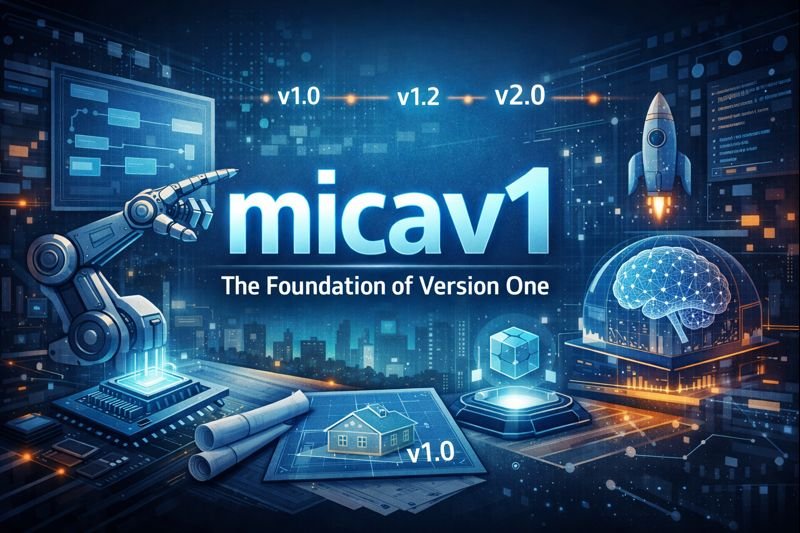
The term micav1 may look short and technical, but its meaning and implications stretch across multiple domains. Whether you’ve seen micav1 mentioned in documentation, research notes, internal systems, or emerging digital tools, it often sparks the same reaction: What exactly does it mean, and why does it matter? In simple terms, micav1 is best understood as a versioned identifier—one that signals an early, foundational stage of a model, system, or framework. In this article, you’ll learn what micav1 represents, how it’s used across industries, why version-one identifiers matter more than most people realize, and how micav1-like concepts influence innovation, reliability, and future development.
By the end, you’ll have a clear, practical understanding of micav1, supported by examples, comparisons, and real-world context.
What Is micav1?
At its core, micav1 functions as a version label. The “v1” suffix commonly indicates a first public or functional release, while “mica” can refer to a base name chosen for a project, system, model, or internal architecture. Together, micav1 usually signals the original implementation that sets the rules for everything that follows.
In many environments, micav1 is not a finished or perfect endpoint. Instead, it represents a baseline: stable enough to use, flexible enough to evolve, and important enough to document carefully. Think of it as the first edition of a book. Later editions may add chapters or fix errors, but the first edition defines the story’s foundation.
A Simple Way to Think About It
Imagine building a house. micav1 is the poured foundation and frame. You can remodel rooms later, but if the foundation is weak or unclear, every future change becomes harder and riskier.
micav1 as a Version Identifier Across Domains
micav1 isn’t limited to one field. That’s part of its usefulness. Similar naming conventions appear in technology, research, manufacturing, and even creative workflows.
In Software and Digital Systems
In software contexts, micav1 often refers to the first working release of a component or service. This version typically defines core behaviors, data structures, and interaction rules. Developers rely on micav1 as a reference point when diagnosing issues or planning upgrades.
In Research and Experimental Models
In research environments, micav1 can label an initial model or hypothesis implementation. It may not be optimized, but it provides measurable results. Later versions are compared back to micav1 to show progress or validate improvements.
In Organizational or Internal Frameworks
Some organizations use micav1-style identifiers internally to track early-stage frameworks, operational processes, or experimental tools. This helps teams communicate maturity levels without long explanations.
Key Characteristics That Define micav1
While the exact implementation can vary, micav1 usually shares a few defining traits.
First, it establishes core logic. This includes rules, workflows, or structures that future versions build upon. Second, it prioritizes functionality over perfection. micav1 is meant to work reliably, not to cover every edge case. Third, it acts as a documentation anchor. Decisions made in micav1 often explain why later changes exist.
These characteristics make micav1 both powerful and fragile. A well-designed micav1 accelerates growth. A rushed micav1 can slow progress for years.
Informational Snapshot of micav1
| Aspect | Description |
|---|---|
| Identifier Type | Versioned baseline (v1) |
| Typical Purpose | Establish initial functionality |
| Common Environments | Technology, research, internal systems |
| Stability Level | Moderate to stable |
| Long-Term Role | Reference point for future versions |
This snapshot shows why micav1 is often preserved, even after newer versions appear.
Why micav1 Matters More Than Later Versions
It’s tempting to focus only on the latest release. However, micav1 holds unique importance because it captures original intent. When teams revisit early decisions, micav1 explains why something was built a certain way.
In real-world projects, teams often discover that a confusing behavior in version five makes perfect sense when traced back to micav1. That historical clarity saves time, reduces mistakes, and prevents unnecessary rewrites.
A Practical Example
A mid-sized tech company once struggled with data inconsistencies after several updates. Engineers eventually reviewed micav1 documentation and realized the original data model assumed a use case that no longer applied. Understanding micav1 didn’t fix the issue directly, but it revealed the correct path forward.
micav1 vs. Later Versions: A Clear Comparison
| Feature | micav1 | Later Versions |
|---|---|---|
| Scope | Core functionality | Expanded features |
| Complexity | Relatively simple | Increasingly complex |
| Flexibility | High | More constrained |
| Role | Foundation | Refinement and scaling |
This comparison highlights why micav1 remains relevant long after newer iterations exist.
Common Misconceptions About micav1
One common misunderstanding is that micav1 is outdated or disposable. In reality, it’s often the most studied version internally. Another misconception is that micav1 is incomplete by definition. While it may lack polish, it is usually complete in terms of its original goals.
Some also assume micav1 cannot be reused. In practice, many teams fork or adapt micav1 for parallel projects, especially when its simplicity becomes an advantage.
Real-World Applications and Scenarios
micav1-style identifiers appear in more places than most people notice. In manufacturing, an initial process version may be labeled similarly to track efficiency changes. In education, early curriculum drafts sometimes follow the same logic. Even creative teams use version-one labels for story outlines or design systems.
The consistent thread is accountability. micav1 marks a moment where ideas become real, measurable, and improvable.
Managing and Maintaining micav1 Over Time
Although micav1 is an early version, it should never be neglected. Proper archiving, clear documentation, and controlled access ensure it remains useful. Many organizations keep micav1 read-only after newer versions launch, preserving it as a historical record.
A short internal guideline often helps:
- Document assumptions clearly.
- Record known limitations.
- Link micav1 to later changes.
This minimal structure keeps micav1 relevant without adding overhead.
Ethical and Operational Considerations
Because micav1 sets direction, decisions made at this stage can have long-term consequences. Poorly considered assumptions may introduce bias, inefficiency, or risk. Reviewing micav1 with diverse perspectives often improves outcomes and reduces blind spots.
In regulated environments, micav1 may also carry compliance implications. Auditors frequently review initial versions to understand how systems evolved.
The Future of micav1-Type Frameworks
As systems grow more complex, the value of a clearly defined micav1 increases. Future tools may automate version tracking, but the principle remains the same: strong beginnings enable sustainable growth.
Rather than viewing micav1 as a temporary step, forward-thinking teams treat it as a long-term asset.
Conclusion
micav1 is more than a simple label. It represents beginnings, intentions, and the structural choices that shape everything that follows. By understanding what micav1 stands for and how it’s used, you gain insight into how systems grow, why decisions matter early, and how clarity at the start saves effort later.
Whether you’re building, studying, or managing complex projects, respecting micav1 means respecting the foundation. Strong foundations don’t just support progress—they make it possible.
Frequently Asked Questions (FAQs)
What does micav1 usually represent?
micav1 typically represents the first functional version of a system, model, or framework. It establishes core rules and structure.
Is micav1 considered stable?
In most cases, yes. micav1 is usually stable enough for real use, even if it lacks advanced features.
Can micav1 still be useful after updates?
Absolutely. micav1 often serves as a reference point to understand design decisions and system evolution.
Is micav1 limited to technology projects?
No. micav1-style versioning appears in research, operations, manufacturing, and creative workflows.
Should micav1 be modified after release?
Generally, no. It’s best preserved as a historical baseline, with changes applied to newer versions instead.

Introduction
In today’s digital world, people constantly search for tools that promise fast, reliable, and accurate information. One term that has been gaining attention online is trucofax. Whether you have seen it in search results, heard it mentioned in online discussions, or stumbled across it while researching verification tools, understanding what it really means is important. This article breaks down everything you need to know about trucofax in clear, simple language. You will learn its purpose, how it is commonly used, its benefits, possible limitations, and how to approach it safely. By the end, you will have a balanced, trustworthy overview that helps you make informed decisions.
What Is Trucofax?
Trucofax is commonly described as an information-based service or concept associated with checking, verifying, or understanding data shared online. Many users encounter the term while searching for ways to confirm facts, reports, or digital records. While interpretations may vary, the core idea behind trucofax focuses on providing clarity in an environment where misinformation can spread quickly. People are drawn to such tools because they want fast answers without complex processes. Understanding trucofax starts with recognizing that it represents a growing demand for transparency and accuracy in the digital age, where trust in information is more valuable than ever.
Will You Check This Article: 001-gdl1ghbstssxzv3os4rfaa-3687053746: A Complete Guide
Why Trucofax Is Gaining Online Attention
The popularity of trucofax is linked to a broader shift in how users consume information. Search engines, social platforms, and digital marketplaces are filled with data, but not all of it is reliable. Users want quick solutions that feel dependable. Trucofax appears in searches because it aligns with this need for verification and reassurance. Another reason for its growing attention is curiosity-driven searches, where users want to understand whether a service is legitimate or useful. As awareness grows, more people explore the term, creating a cycle of interest, discussion, and increased visibility in search engine results.
Common Uses of Trucofax
Many people associate trucofax with checking details, confirming claims, or reviewing information before making decisions. These decisions may relate to online interactions, documents, or general research. The appeal lies in the idea of simplifying complex verification tasks. Users often look for straightforward insights rather than technical explanations. Trucofax, as a concept, fits into this space by offering a sense of confidence. It reflects how modern users prefer tools that save time and reduce uncertainty. While use cases can differ, the common thread is the desire for clarity in a crowded digital landscape.
Benefits of Using Trucofax
One major benefit associated with trucofax is peace of mind. When people feel unsure about information, having a reference point helps reduce doubt. Another advantage is accessibility, as users expect easy-to-understand results without specialized knowledge. Trucofax also represents efficiency, allowing users to focus on decisions rather than endless research. Additionally, it aligns with the growing emphasis on digital responsibility, where verifying information is seen as a smart habit. These benefits explain why many users are curious about trucofax and why it continues to appear in online searches and discussions.
Limitations and Things to Consider
While trucofax sounds appealing, it is important to approach it with realistic expectations. No single tool or concept can guarantee perfect accuracy in every situation. Users should understand that results may depend on available data and context. Over-reliance on any one source can lead to misunderstandings. It is also wise to consider privacy and data handling when exploring verification-related services. Trucofax should be viewed as part of a broader approach to informed decision-making, not a replacement for critical thinking or cross-checking information from multiple reliable sources.
Safety, Trust, and Responsible Use
Trust is a key factor when dealing with information tools. When exploring trucofax-related resources, users should look for transparency, clear explanations, and responsible practices. Avoid platforms that make unrealistic promises or lack clear contact information. Responsible use means combining insights from trucofax with other trusted sources. This approach strengthens confidence and reduces risk. In a digital environment where scams and misinformation exist, cautious evaluation is essential. By staying informed and alert, users can benefit from tools like trucofax while protecting their data and maintaining control over their decisions.
How Trucofax Fits Into Modern Search Behavior
Search engines reward content that answers user questions clearly and reliably. Trucofax fits well into this trend because it addresses a real user intent: understanding and verifying information. People often search with questions like “What is trucofax?” or “Is trucofax reliable?” Creating content that responds directly to these queries improves visibility. The term also benefits from related keywords such as verification, data accuracy, and online trust. This alignment with user intent explains why trucofax-related topics continue to perform well in organic search results.
The Future Outlook of Trucofax
As digital information continues to expand, the need for clarity will only increase. Concepts like trucofax are likely to evolve alongside user expectations and technology. Future developments may focus on better transparency, improved accuracy, and stronger user education. The long-term relevance of trucofax depends on how well it adapts to changing digital standards and user needs. What remains constant is the importance of trust. Tools and ideas that prioritize clarity and responsible information sharing will continue to attract attention in an increasingly complex online world.
Conclusion
Trucofax represents a growing interest in clarity, verification, and trust in the digital age. As users face overwhelming amounts of information, the appeal of simple, reliable insights becomes stronger. By understanding what trucofax is, how it is commonly used, and what its limitations are, readers can approach it with confidence and caution. The key takeaway is balance: use tools like trucofax as helpful references while maintaining critical thinking and cross-checking important information. With the right mindset, trucofax can be part of a smarter, more informed digital experience.
Frequently Asked Questions (FAQs)
What does trucofax mean?
Trucofax generally refers to a concept or service associated with checking, verifying, or understanding information online. People use the term when they want clarity or reassurance about data they encounter during research or decision-making.
Is trucofax reliable for verification?
Reliability depends on the source and how it is used. Trucofax should be treated as a supportive reference rather than a single definitive answer. Combining it with other trusted sources improves accuracy.
Can trucofax replace manual research?
Trucofax can simplify information gathering, but it should not completely replace manual research. Critical thinking and cross-checking remain important for making well-informed decisions.
Is trucofax safe to use?
Safety depends on the platform associated with the term. Users should look for transparency, clear policies, and responsible data practices before trusting any service related to trucofax.
Why is trucofax popular in search engines?
Trucofax is popular because it aligns with common search intent. Users want quick, clear answers about information accuracy, and the term reflects this growing demand for trust and verification online.


Keeping a home clean can feel like a never-ending chore, especially when dust, pet hair, and daily debris pile up faster than expected. Robot hoovers have already helped lighten the workload by vacuuming automatically, but the introduction of self-emptying technology takes convenience to an entirely new level. These advanced systems let homeowners enjoy days or even weeks of hands-free cleaning. Understanding how they work reveals why they’ve become one of the most time-saving appliances available today. Let’s explore how self-empty robot hoovers help reclaim your time and simplify home maintenance.
How Self-Empty Robot Hoovers Save You Time
Here are the main ways that self-emptying robot vacuums operate with both suction power and intelligent docking stations that handle the dirt for you.
Hands-Free Dirt Disposal Means Weeks Without Touching the Bin
A traditional robot vacuum requires frequent manual emptying—sometimes after every run, especially in homes with pets. With a self-empty model, the robot returns to its base and automatically transfers dust into a larger, sealed bag.For example, the eufy Clean X8 Pro with Self-Empty Station can store debris for up to 45 days, keeping pet hair contained and out of sight. This dramatically reduces the need for daily or even weekly maintenance, giving you more time to focus on your day rather than your dustbin.
Larger Dust Bags Minimize Maintenance and Keep Homes Fresher
Self-empty systems use oversized dust bags designed to trap allergens and debris effectively. These bags keep dirt securely sealed, which is particularly beneficial for allergy-sensitive homes.Because bags only need replacing every month or two, it means far fewer interruptions to your routine. Models like eufy’s self-empty stations not only store more dirt but also use bacteriostatic materials to prevent odours from developing—another time-saving perk since you won’t need to clean the bin as frequently.
Smart Navigation Ensures Faster, More Efficient Cleaning Routes
Self-empty robot hoovers often include the brand’s latest navigation and mapping technologies, making each cleaning cycle faster and smarter. For instance, eufy’s iPath Laser Navigation creates precise home maps, allowing the robot to clean in organised paths rather than random routes.This efficiency means the robot finishes its job quicker, which also reduces the number of times it needs to recharge or revisit the same areas. By completing cleaning tasks in fewer passes, the robot works faster—and you enjoy clean floors sooner.
Automatic Adjustments Handle Carpets, Corners, and Pet Hair Effortlessly
Modern self-empty robot hoovers adapt to different floor types automatically. Whether it’s boosting suction on carpets or using side brushes to pull debris from along skirting boards, the robot reduces the need for manual intervention.Take the eufy L60 Hybrid with Self-Empty Station, which features BoostIQ Technology that increases suction when needed. Combined with its mop attachment, it can simultaneously vacuum and wipe hard floors. By handling multiple cleaning tasks in a single run, the robot eliminates the need for extra touch-ups.
App Control Lets You Clean While You’re Away
Another time-saving feature is remote and automated control through dedicated apps. Users can schedule cleanings, set no-go zones, or select specific rooms—all without being home.This means you can return to a clean house after work, errands, or travel. Features like AI.Map 2.0 from eufy further allow room customization, ensuring the robot cleans exactly where needed, eliminating wasted time.
Conclusion
Self-empty robot hoovers are designed to give homeowners back their most valuable resource: time. By handling dirt disposal automatically, navigating with precision, and adapting to different floor types, these devices dramatically reduce weekly cleaning workloads. Whether you’re a busy professional, a parent, or a pet owner, self-emptying technology makes daily cleaning effortless. So, choose the right robot hoover for your lifestyle to enjoy consistent cleanliness with less effort and more freedom in your routine.

Galoble Explained: Meaning, Impact, and Real-World Use

PLG Supplies: A Complete Guide to Building Product-Led Success

SOA OS23 Explained: A Modern Blueprint for Modular Systems

Gomyfinance.com Create Budget: A Simple Guide to Managing Your Money Effectively

What is Blogsternation — A Detailed Guide for Bloggers & Creators