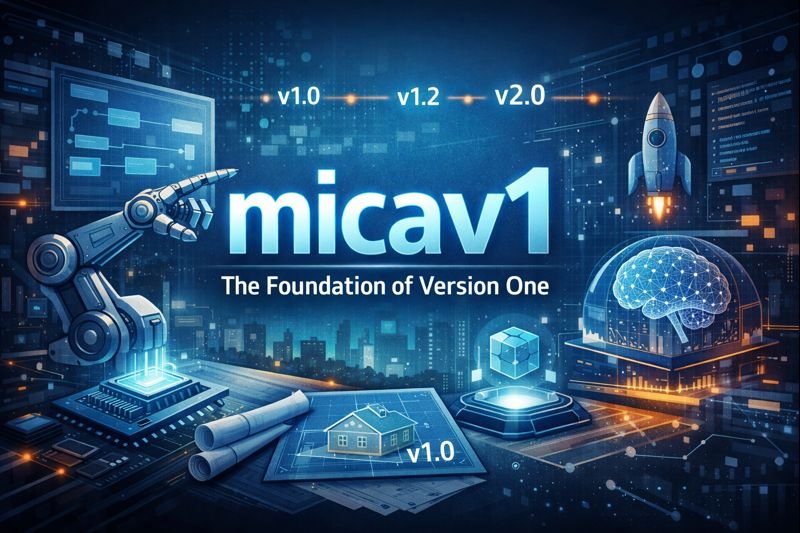
micav1 Explained: Meaning, Uses, and Real-World Impact
Introduction
The term micav1 may look short and technical, but its meaning and implications stretch across multiple domains. Whether you’ve seen micav1 mentioned in documentation, research notes, internal systems, or emerging digital tools, it often sparks the same reaction: What exactly does it mean, and why does it matter? In simple terms, micav1 is best understood as a versioned identifier—one that signals an early, foundational stage of a model, system, or framework. In this article, you’ll learn what micav1 represents, how it’s used across industries, why version-one identifiers matter more than most people realize, and how micav1-like concepts influence innovation, reliability, and future development.
By the end, you’ll have a clear, practical understanding of micav1, supported by examples, comparisons, and real-world context.
What Is micav1?
At its core, micav1 functions as a version label. The “v1” suffix commonly indicates a first public or functional release, while “mica” can refer to a base name chosen for a project, system, model, or internal architecture. Together, micav1 usually signals the original implementation that sets the rules for everything that follows.
In many environments, micav1 is not a finished or perfect endpoint. Instead, it represents a baseline: stable enough to use, flexible enough to evolve, and important enough to document carefully. Think of it as the first edition of a book. Later editions may add chapters or fix errors, but the first edition defines the story’s foundation.
A Simple Way to Think About It
Imagine building a house. micav1 is the poured foundation and frame. You can remodel rooms later, but if the foundation is weak or unclear, every future change becomes harder and riskier.
micav1 as a Version Identifier Across Domains
micav1 isn’t limited to one field. That’s part of its usefulness. Similar naming conventions appear in technology, research, manufacturing, and even creative workflows.
In Software and Digital Systems
In software contexts, micav1 often refers to the first working release of a component or service. This version typically defines core behaviors, data structures, and interaction rules. Developers rely on micav1 as a reference point when diagnosing issues or planning upgrades.
In Research and Experimental Models
In research environments, micav1 can label an initial model or hypothesis implementation. It may not be optimized, but it provides measurable results. Later versions are compared back to micav1 to show progress or validate improvements.
In Organizational or Internal Frameworks
Some organizations use micav1-style identifiers internally to track early-stage frameworks, operational processes, or experimental tools. This helps teams communicate maturity levels without long explanations.
Key Characteristics That Define micav1
While the exact implementation can vary, micav1 usually shares a few defining traits.
First, it establishes core logic. This includes rules, workflows, or structures that future versions build upon. Second, it prioritizes functionality over perfection. micav1 is meant to work reliably, not to cover every edge case. Third, it acts as a documentation anchor. Decisions made in micav1 often explain why later changes exist.
These characteristics make micav1 both powerful and fragile. A well-designed micav1 accelerates growth. A rushed micav1 can slow progress for years.
Informational Snapshot of micav1
| Aspect | Description |
|---|---|
| Identifier Type | Versioned baseline (v1) |
| Typical Purpose | Establish initial functionality |
| Common Environments | Technology, research, internal systems |
| Stability Level | Moderate to stable |
| Long-Term Role | Reference point for future versions |
This snapshot shows why micav1 is often preserved, even after newer versions appear.
Why micav1 Matters More Than Later Versions
It’s tempting to focus only on the latest release. However, micav1 holds unique importance because it captures original intent. When teams revisit early decisions, micav1 explains why something was built a certain way.
In real-world projects, teams often discover that a confusing behavior in version five makes perfect sense when traced back to micav1. That historical clarity saves time, reduces mistakes, and prevents unnecessary rewrites.
A Practical Example
A mid-sized tech company once struggled with data inconsistencies after several updates. Engineers eventually reviewed micav1 documentation and realized the original data model assumed a use case that no longer applied. Understanding micav1 didn’t fix the issue directly, but it revealed the correct path forward.
micav1 vs. Later Versions: A Clear Comparison
| Feature | micav1 | Later Versions |
|---|---|---|
| Scope | Core functionality | Expanded features |
| Complexity | Relatively simple | Increasingly complex |
| Flexibility | High | More constrained |
| Role | Foundation | Refinement and scaling |
This comparison highlights why micav1 remains relevant long after newer iterations exist.
Common Misconceptions About micav1
One common misunderstanding is that micav1 is outdated or disposable. In reality, it’s often the most studied version internally. Another misconception is that micav1 is incomplete by definition. While it may lack polish, it is usually complete in terms of its original goals.
Some also assume micav1 cannot be reused. In practice, many teams fork or adapt micav1 for parallel projects, especially when its simplicity becomes an advantage.
Real-World Applications and Scenarios
micav1-style identifiers appear in more places than most people notice. In manufacturing, an initial process version may be labeled similarly to track efficiency changes. In education, early curriculum drafts sometimes follow the same logic. Even creative teams use version-one labels for story outlines or design systems.
The consistent thread is accountability. micav1 marks a moment where ideas become real, measurable, and improvable.
Managing and Maintaining micav1 Over Time
Although micav1 is an early version, it should never be neglected. Proper archiving, clear documentation, and controlled access ensure it remains useful. Many organizations keep micav1 read-only after newer versions launch, preserving it as a historical record.
A short internal guideline often helps:
- Document assumptions clearly.
- Record known limitations.
- Link micav1 to later changes.
This minimal structure keeps micav1 relevant without adding overhead.
Ethical and Operational Considerations
Because micav1 sets direction, decisions made at this stage can have long-term consequences. Poorly considered assumptions may introduce bias, inefficiency, or risk. Reviewing micav1 with diverse perspectives often improves outcomes and reduces blind spots.
In regulated environments, micav1 may also carry compliance implications. Auditors frequently review initial versions to understand how systems evolved.
The Future of micav1-Type Frameworks
As systems grow more complex, the value of a clearly defined micav1 increases. Future tools may automate version tracking, but the principle remains the same: strong beginnings enable sustainable growth.
Rather than viewing micav1 as a temporary step, forward-thinking teams treat it as a long-term asset.
Conclusion
micav1 is more than a simple label. It represents beginnings, intentions, and the structural choices that shape everything that follows. By understanding what micav1 stands for and how it’s used, you gain insight into how systems grow, why decisions matter early, and how clarity at the start saves effort later.
Whether you’re building, studying, or managing complex projects, respecting micav1 means respecting the foundation. Strong foundations don’t just support progress—they make it possible.
Frequently Asked Questions (FAQs)
What does micav1 usually represent?
micav1 typically represents the first functional version of a system, model, or framework. It establishes core rules and structure.
Is micav1 considered stable?
In most cases, yes. micav1 is usually stable enough for real use, even if it lacks advanced features.
Can micav1 still be useful after updates?
Absolutely. micav1 often serves as a reference point to understand design decisions and system evolution.
Is micav1 limited to technology projects?
No. micav1-style versioning appears in research, operations, manufacturing, and creative workflows.
Should micav1 be modified after release?
Generally, no. It’s best preserved as a historical baseline, with changes applied to newer versions instead.