Sports
Washington Commanders vs Philadelphia Eagles Match Player Stats

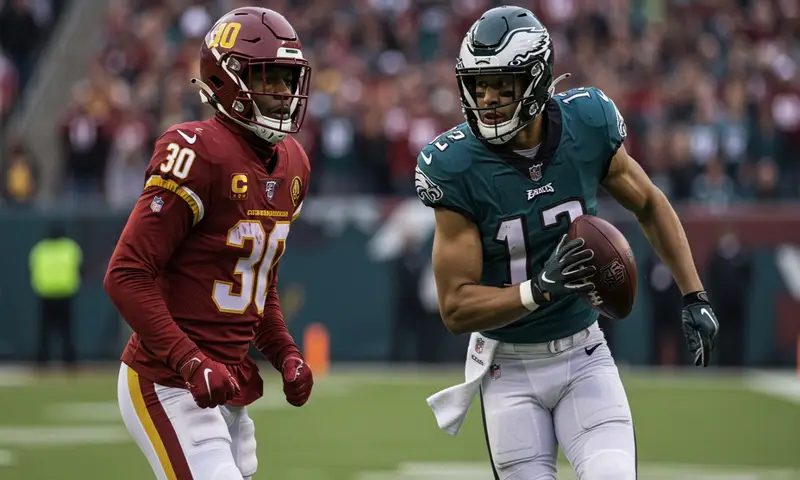
The Washington Commanders and Philadelphia Eagles have always been intense rivals in the NFL, and their matchups bring excitement for fans and analysts alike. Each game between these two teams offers a fresh opportunity to witness powerful performances, high stakes, and key player moments that define the outcome of the game. In this article, we dive deep into the match player stats of the recent Washington Commanders vs Philadelphia Eagles game, providing an insightful breakdown of the top players’ performances, key statistics, and significant game moments.
Offensive Stats: Key Player Contributions
The offensive battle between the Washington Commanders and Philadelphia Eagles was nothing short of thrilling, with both teams showcasing their strengths on the field. For the Washington Commanders, their offensive line faced a tough challenge against the Eagles’ defense, which is known for its ability to disrupt the passing game and stop the run.
At quarterback for the Commanders, Sam Howell displayed moments of brilliance and adversity. Howell’s performance was a mixed bag, with some impressive throws and moments where he struggled under pressure. He completed 65% of his passes for 280 yards, with two touchdowns and one interception. Howell’s ability to move the ball downfield kept the game competitive, though some costly mistakes, including a forced interception, proved to be pivotal in the outcome.
For the Eagles, Jalen Hurts continued his stellar season with a dominant performance. Hurts, known for his dual-threat capability, threw for 250 yards and two touchdowns while also adding 40 rushing yards. His ability to escape pressure and extend plays was key to Philadelphia’s success. His connection with wide receivers, notably A.J. Brown, who had a breakout game with 110 receiving yards and one touchdown, was instrumental in putting the Commanders on the backfoot.
The running backs for both teams also played crucial roles. Brian Robinson Jr. of the Commanders had a solid outing with 85 rushing yards on 21 carries, showing resilience against the Eagles’ defensive front. On the Eagles’ side, Miles Sanders contributed 70 yards on 15 carries, helping to balance the Eagles’ offensive attack and keep the Washington defense honest.
Defensive Stats: Turning the Tide
The defensive units of both teams had their moments of brilliance, with several standout players making critical plays that influenced the final result. For the Washington Commanders, Montez Sweat proved to be a disruptive force, recording two sacks and several quarterback pressures that limited Hurts’ ability to comfortably execute his game plan. Sweat’s performance showcased his ability to dominate the line of scrimmage, and he was a key reason why the Commanders were able to limit some of the Eagles’ explosive plays.
On the Eagles’ side, Fletcher Cox and Haason Reddick were pivotal in controlling the line of scrimmage. Cox’s presence in the middle of the defense allowed the Eagles to stuff the run effectively, while Reddick’s pass-rushing prowess led to two sacks and several hurried throws by Howell. The Eagles’ defensive backfield, led by Darius Slay, also had a strong showing, limiting Washington’s wide receivers and securing an interception off Howell in the second half.
The Eagles’ defense stepped up when it mattered most, forcing crucial turnovers that changed the momentum of the game. Their ability to pressure the quarterback and force mistakes was one of the major contributors to their victory.
Special Teams Stats: Field Position and Big Plays
In a game where every possession counted, special teams played a significant role in dictating the field position and providing critical momentum shifts. Tress Way, the Commanders’ punter, had a solid performance, averaging 46 yards per punt and pinning the Eagles deep in their own territory multiple times. However, Jake Elliott, the Eagles’ kicker, was perfect on the day, converting all his field goals, including a 52-yard bomb that gave the Eagles a crucial three-point lead late in the fourth quarter.
The special teams units from both teams were disciplined, but it was Elliott’s clutch kicks that ultimately proved to be the difference in the game. Additionally, the Eagles’ return unit, led by Quez Watkins, had a strong showing, providing solid returns that helped set up advantageous field positions for their offense.
Game-Changing Moments: Key Stats that Decided the Outcome
The game was filled with several key moments that swung the momentum in favor of one team or the other. One of the most pivotal moments came in the third quarter when the Commanders were driving downfield and looking poised to take the lead. However, Jalen Hurts and the Eagles’ defense combined for a game-changing turnover. Hurts threw a pinpoint pass to Devonta Smith on a deep route, and the connection set up the Eagles for a quick score, effectively taking control of the game.
Another key moment was the Eagles’ defense forcing a fumble from Antonio Gibson late in the fourth quarter. With Washington trailing by just one possession, this turnover allowed the Eagles to bleed the clock and maintain possession, sealing the victory for Philadelphia.
In terms of total yards, the Eagles outgained the Commanders 375 to 320, a reflection of their ability to execute on both sides of the ball. The Commanders had opportunities to capitalize but struggled to finish drives, resulting in missed opportunities that ultimately came back to haunt them.
Player Stats Breakdown: Who Led the Charge?
Now, let’s take a closer look at the top performers from both teams:
- Sam Howell (Washington Commanders): 23 completions, 280 yards, 2 touchdowns, 1 interception
- Jalen Hurts (Philadelphia Eagles): 22 completions, 250 yards, 2 touchdowns, 40 rushing yards
- A.J. Brown (Philadelphia Eagles): 7 receptions, 110 yards, 1 touchdown
- Montez Sweat (Washington Commanders): 2 sacks, 4 tackles for loss
- Miles Sanders (Philadelphia Eagles): 70 rushing yards, 15 carries
- Brian Robinson Jr. (Washington Commanders): 85 rushing yards, 21 carries
- Fletcher Cox (Philadelphia Eagles): 1 sack, 3 tackles
- Haason Reddick (Philadelphia Eagles): 2 sacks, 1 forced fumble
- Jake Elliott (Philadelphia Eagles): 3/3 on field goals (long of 52 yards)
Final Thoughts: A Battle of Titans
In conclusion, the Washington Commanders vs Philadelphia Eagles game was a thrilling matchup that showcased the strengths and weaknesses of both teams. The Eagles were able to capitalize on their offensive balance, strong defense, and special teams play to secure a hard-fought victory. Meanwhile, the Commanders, despite some strong individual performances, were unable to capitalize on key moments, ultimately falling short.
The player stats from this game reflect the importance of execution in critical moments. Both teams had players who stepped up when needed, but it was the Eagles’ ability to control the game in the second half and execute in the red zone that ultimately led them to victory. Moving forward, the Commanders will need to shore up their offensive line and continue to develop their young quarterback, while the Eagles will look to build on their momentum as they continue their push for a strong postseason run.
This game serves as a reminder that in the NFL, every detail matters. From quarterback play to defensive pressure, to special teams, it’s all part of the intricate puzzle that makes each game a unique and exciting spectacle. For fans of both teams, the Washington Commanders vs Philadelphia Eagles matchup is always one to watch closely, as both teams continue to build their legacies in the NFL.

A cricket ball is more than just leather over cork—it’s a bowler’s weapon, a batter’s challenge, and one of cricket’s most fascinating tools. In this article, we’ll explore everything—from red and white balls to swing, seam, and how manufacturers shape gameplay.
What Is a Cricket Ball?
A cricket ball is a hard, leather-covered ball built from a cork core wrapped tightly in string, then stitched together with a raised seam. It’s heavier and denser than a baseball and has strict specifications under cricket law.
Colours & Uses: Red, White, Pink
Red Cricket Ball
Used in Test and first-class cricket, the red cricket ball is traditional and durable. It shines well against white clothing and grass, offering visibility in daylight.
White Cricket Ball
Introduced for limited-overs and night matches, the white cricket ball is more visible under lights and against colored jerseys. But it loses shine faster and degrades in swing capability sooner.
Pink Cricket Ball
Designed for day-night Tests. Pink stands out in mixed lighting and helps players and spectators follow the action. The heavier dye changes the way the ball wears compared to red or white ones.
Anatomy & Makers: Leather, Seam & Brands
A cricket ball’s core is cork, wrapped in string, then encased in four leather panels—stitched to create the seam. That seam has six rows of stitching and is central to swing and seam behavior.
Major brands include Kookaburra, Dukes, and SG:
- Kookaburra: Machine-made; used globally for red Test balls (except a few places), and universally for white limited-overs balls.
- Dukes: Handmade with a prominent seam. Used in England, Ireland, West Indies Tests. Known for better swing.
- SG: India’s red Test ball. Hand-stitched, pronounced seam aids spin and reverse swing.
Recent controversy: Dukes balls in England’s summer series faced criticism for going soft too quickly—a concern among bowlers and captains.
Swing Bowling & Seam Position
Swing Bowling
Swing occurs when the ball curves in flight, achieved by polishing one side to stay smooth, leaving the other rough. The turbulent airflow causes the ball to swing toward the rough side. Reverse swing occurs when a worn ball is bowled at higher speeds.
Seam Position
The raised seam divides the ball into two hemispheres. When angled, it creates airflow asymmetry, helping bowlers generate swing. Practical studies confirm the seam’s critical role—not just in conventional swing, but also influencing reverse swing.
Seam Bowling: Bounce with a Twist
Seam bowling leverages the raised seam making contact with the pitch to cause unpredictable movement after bounce. Bowlers maintain seam position upright—between finger and middle, and keep wrists straight—to control deviation.
Even small seam misalignments can upset batters, but consistent seam control helps bowlers challenge the edge of the bat, and sometimes sneak in a catch.
Why Manufacturers & Conditions Matter
Details like seam height, leather hardness, and stitching affect performance. For instance:
- SG balls: Softer leather, good for reverse swing and spin, prominent seam aids grip.
- Dukes vs Kookaburra: Dukes swing more due to hand stitching; Kookaburra softens faster. Manufacturers argue this can tilt the game toward batters or bowlers, depending on choice.
Theft of Tradition: Ball Conditions & Controversy
Only polishing with sweat is allowed (saliva was once permitted but is now banned); scuffing or seam-picking is strictly illegal. Ball tampering has been at the heart of several controversies.
It’s also fascinating how materials and environment cause variations: leather quality, heat, handling—no two balls are truly the same.
Conclusion
The cricket ball is much more than a basic tool—it’s a complex piece of craft, science, and strategy. Whether it’s the traditional red cricket ball, the visibility-focused white or pink, the seam that guides swing, or the brand-specific feel—everything shapes how the game unfolds. Seam and swing define bowling artistry. Leather, seam, polishing, and conditions decide how long that challenge lasts. Even the controversy over softer Dukes balls in 2025 shows how vital the ball remains to cricket’s drama.
FAQs
1. Why do red and white cricket balls behave differently?
Manufacturers make them the same way but dye them differently. White balls lose shine faster and their seam flattens quicker than red balls, affecting swing and visibility.
2. What causes swing in a cricket ball?
Swing arises when one side is polished smooth and the other remains rough, which creates airflow differences.Bowlers angle the seam to steer the swing.
3. What makes Dukes and SG balls special?
Dukes feature hand-stitched seams, making them ideal for swing, and are popular in England, Ireland, and the West Indies.
SG balls feature bold seam and softer leather—long-lasting, spin-friendly, ideal for reverse swing and grip.
4. Why is seam position vital?
The raised seam disturbs airflow and helps curl the ball in the air (swing). On hitting the pitch upright, it causes erratic deviations (seam movement).
5. Are there any rules around shining the ball?
You may polish with sweat (saliva was banned in 2022) and shine only one side. Any roughing or tampering is strictly prohibited and can result in penalties.

Galoble Explained: Meaning, Impact, and Real-World Use

PLG Supplies: A Complete Guide to Building Product-Led Success

SOA OS23 Explained: A Modern Blueprint for Modular Systems

Gomyfinance.com Create Budget: A Simple Guide to Managing Your Money Effectively

What is Blogsternation — A Detailed Guide for Bloggers & Creators